
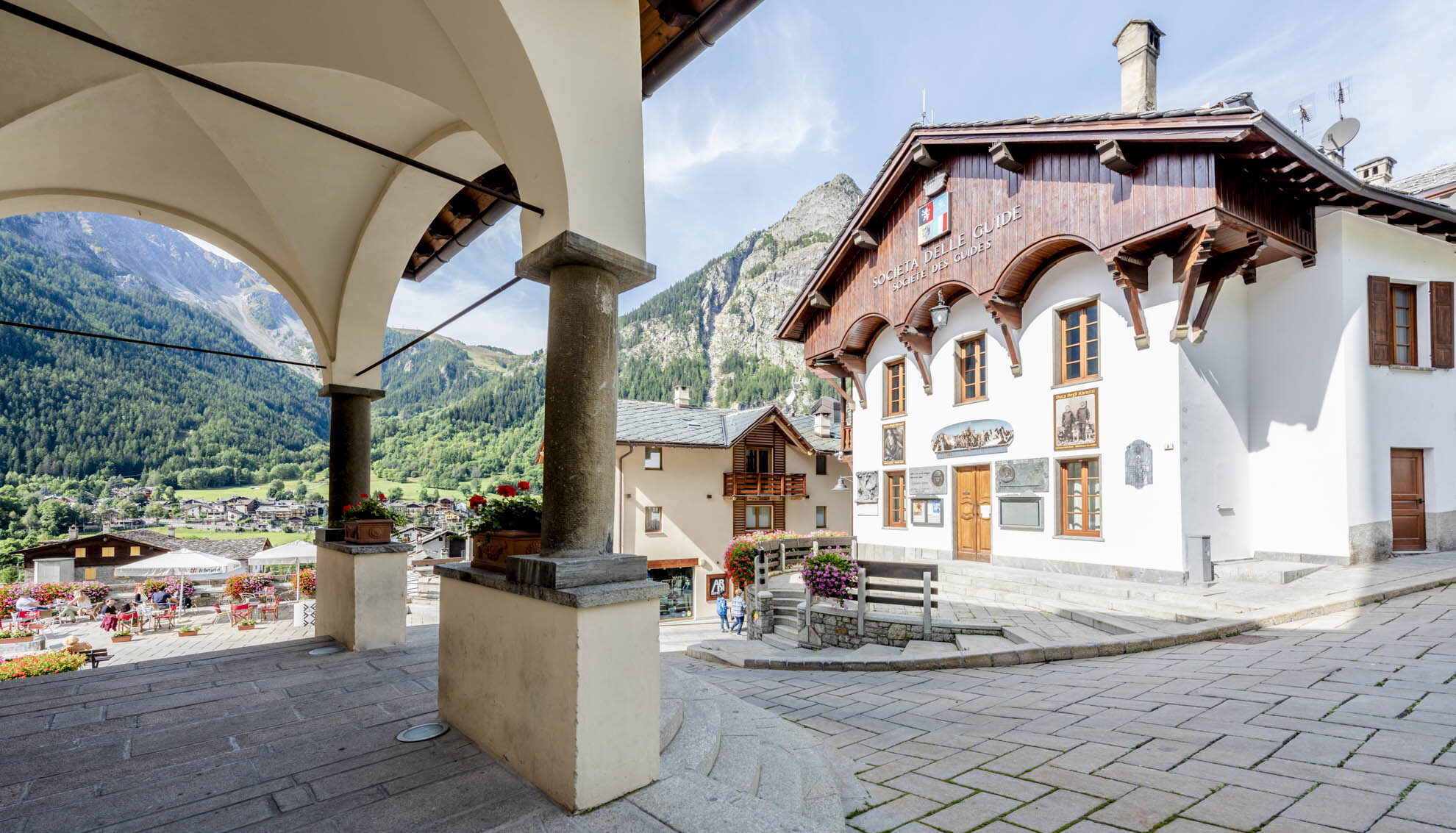
The Ferret, Veny and Sapin valleys are a natural embrace that welcomes walking enthusiasts both in summer and winter, offering landscapes that restore body and mind. Walking through these enchanting settings is an experience that fills the heart with beauty and serenity, where every step seems to dance to the rhythm of nature.
The heart of Courmayeur also preserves its timeless charm, with corners rich in history that whisper legends of ancient inhabitants and notable figures. Busts, plaques and centuries-old architecture tell the story of a past that still lives on in the present, yet there are hidden details that only the most curious can discover.
And this is where TOR Culture comes into play: a guide that accompanies you in an engaging and conscious way along the streets of Courmayeur, revealing fascinating stories, curiosities and little-known treasures. Each stop of the tour is a journey through time, to understand and deeply feel the authentic soul of this enchanting place.
After reading this guide, you will be ready to experience Courmayeur with new eyes, discovering details and hidden corners that will make you fall even more in love with this extraordinary land.
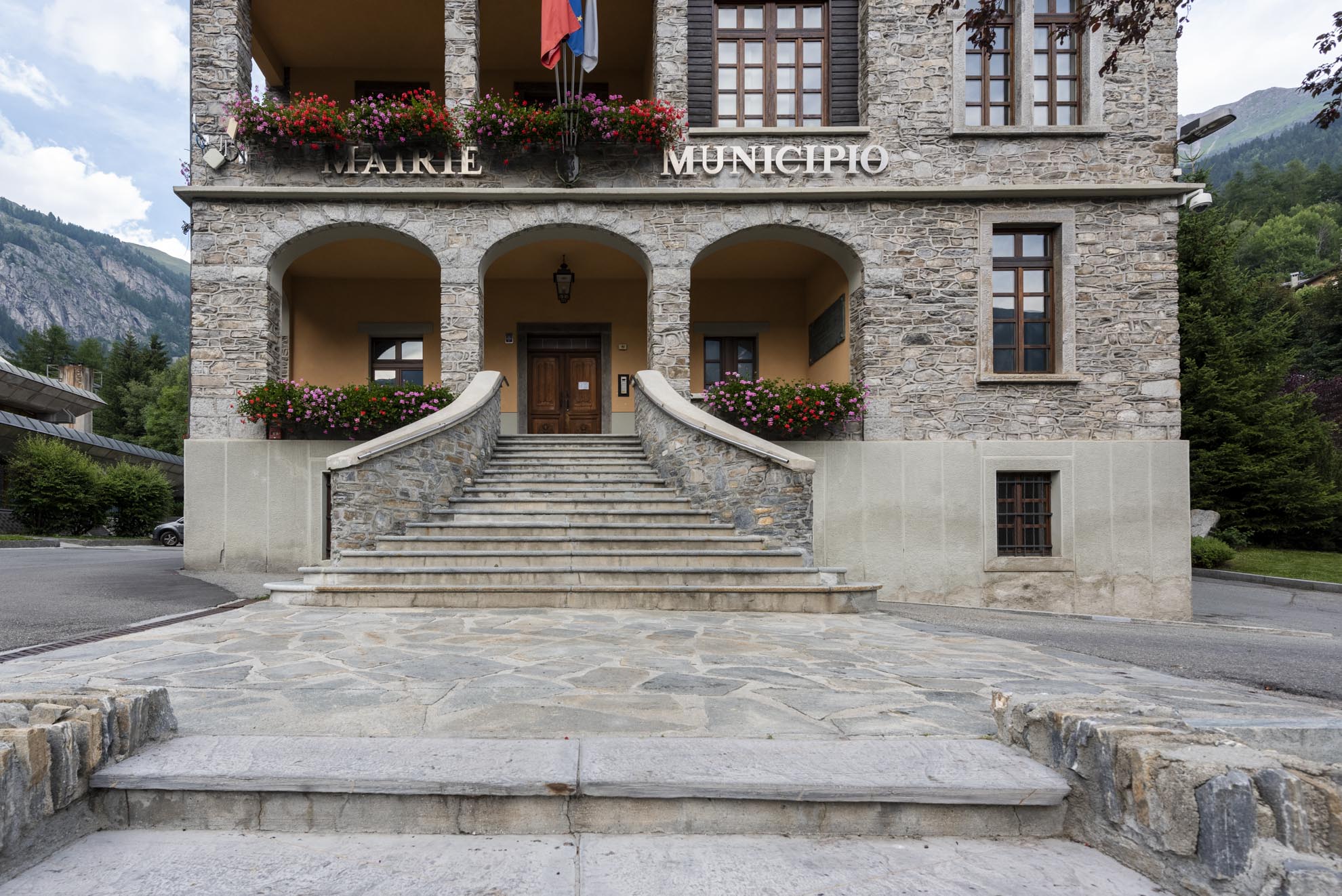
Built in 1930, this building holds a special place in the history of Courmayeur, as it once housed the primary school, made possible thanks to the generous donation of Countess Marone Cinzano, who regularly visited the village. A plaque placed beside the main entrance commemorates this act of benevolence.
The external staircase has, for generations, been the stage for meaningful community moments: from school photographs at the beginning of the year to the traditional Coscritti celebrations, as well as many other events that have marked the life of the village. Today, this corner remains a symbol of tradition and shared memory within the community.
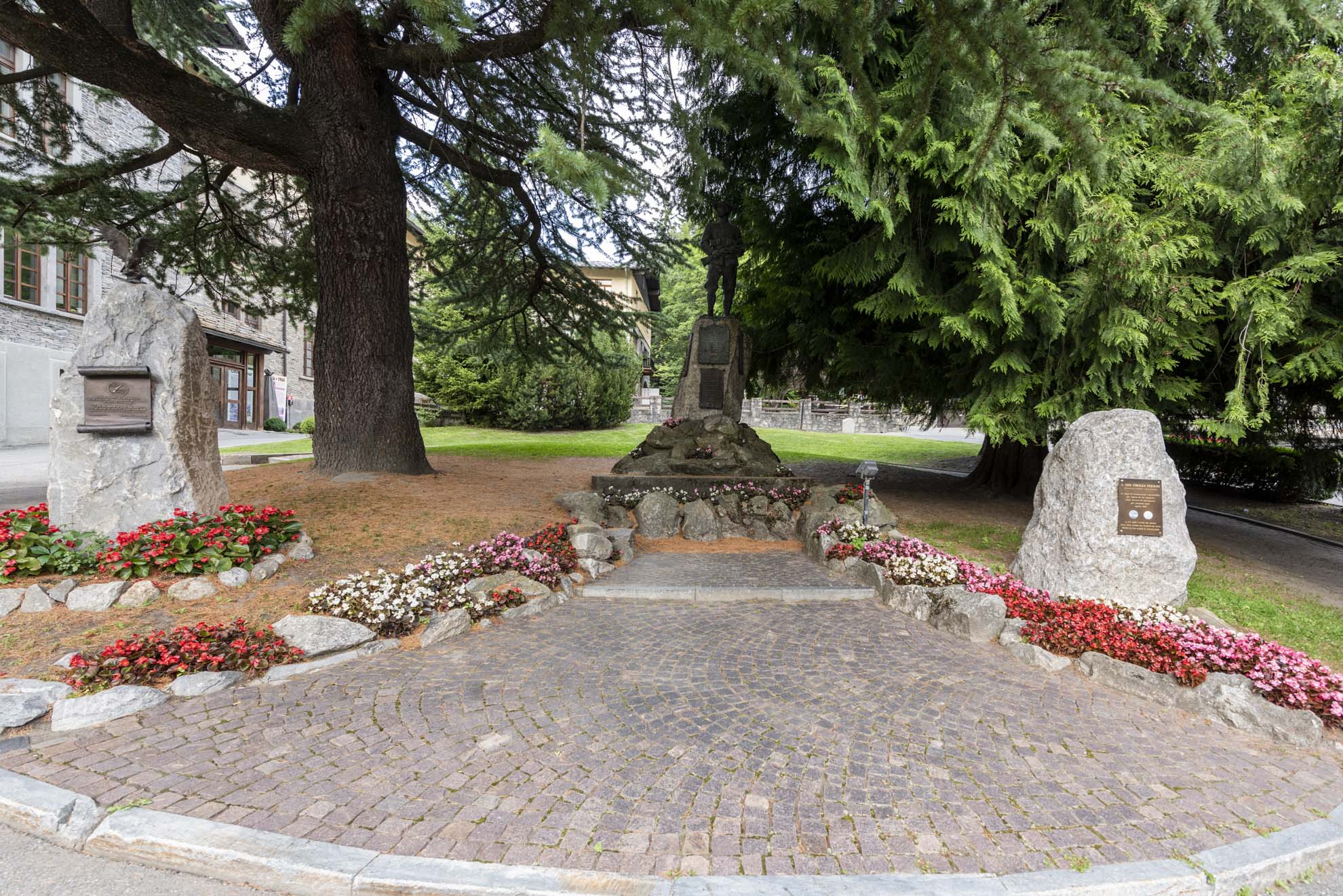
This place pays tribute to the fallen of both World Wars, as well as to unforgettable figures such as Don Cirillo Perron (1912–1996) and Dr. Pietro Bassi (1921–2011).
Don Cirillo, historic parish priest of Courmayeur, is remembered not only for his religious devotion but also for his passion for mountaineering, which inspired generations of locals and visitors to approach the mountains. In May 2015, he was recognized as Righteous Among the Nations by Yad Vashem in Jerusalem for having saved the young Giulio Segre, a Jewish child, from Nazi persecution by passing him off as his nephew and risking his own life to protect him.
Dr. Pietro Bassi, on the other hand, was a pioneering physician in mountain rescue. In the late 1980s, he founded the first Volunteer Rescue Association in Courmayeur, an initiative that later expanded throughout the Aosta Valley, saving lives and creating a network of solidarity that still endures today. Both figures embody courage, dedication, and a deep love for their community and the mountains.
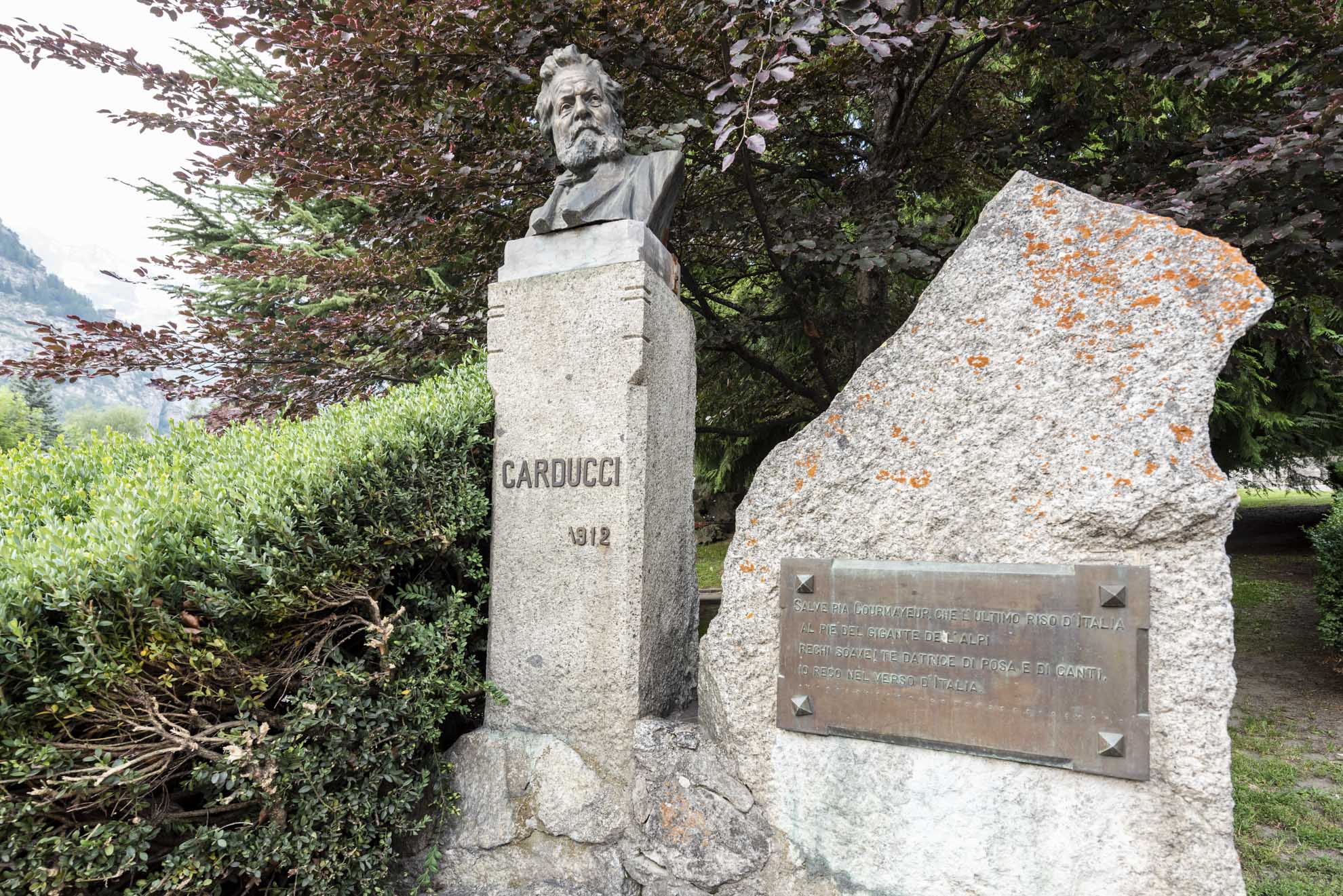
Giosuè Carducci first visited Courmayeur in 1887, returning several times in the following years. His inspiration drawn from the beauty of the mountains is reflected in the poem “Courmayeur” from Odi Barbare:
“Salve, o pia Courmayeur, che l’ultimo riso d’Italia
al piè del gigante de l’Alpi
rechi soave! te, datrice di posa e di canti,
io reco nel verso d’Italia.”
During his last stay in the Aosta Valley, Carducci met Abbot Pierre Chanoux, rector of the Hospice of the Little St Bernard, a man who united nature and spiritual reflection. Despite his anticlerical stance, Carducci grew closer to the Christian faith, experiencing a spiritual transformation right here in Courmayeur.
We cross Jules Brocherel Square (1871–1954), a tribute to one of the pioneers of local and Alpine ethnography, a photographer, botanist, and promoter of the Aosta Valley’s tourist image. Born in Courmayeur, Brocherel was among the first to recognize the tourism potential of his homeland, publishing in 1895 the “Illustrated Guide to Courmayeur and Surroundings”, an early milestone of modern tourism in the region. His pioneering spirit and deep love for the mountains are still celebrated today.
Continuing on, we reach the square dedicated to Abbé Joseph-Marie Henry (1870–1947), also a native of Courmayeur and son of a mountain guide. A parish priest, mountaineer, botanist, and writer, he contributed to the creation of the Chanousia Alpine Botanical Garden at the Little St Bernard Pass and the botanical park at Plan Gorret. His legacy, marked by a profound passion for nature and community, remains a symbol of the deep connection with the mountains.
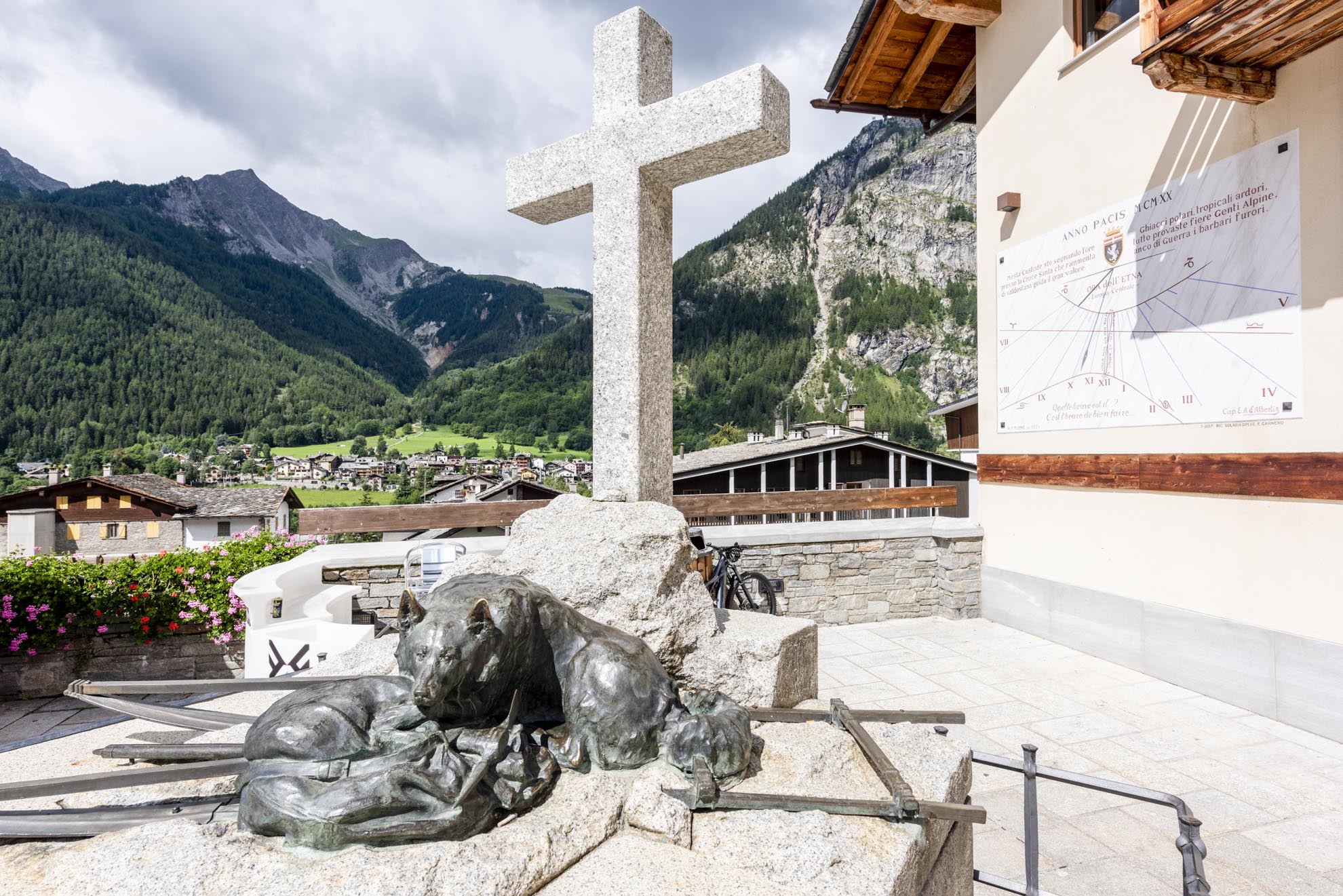
Within the Plan Chécrouit ski area, on the right stands the monument to Félix Ollier (…–1900), an Alpine guide who in 1899 joined the expedition to the North Pole organized by the Duke of the Abruzzi. Ollier was the only member who never returned. The plaque reads:
Félix Ollier, mountain guide
lost on the ice of the Arctic Ocean
during the sled expedition to the North Pole
March 1900 – Luigi di Savoia
Behind the monument, in 1920, a sundial dedicated to Ollier was created by Enrico Alberto De Albertis, featuring verses celebrating the expedition. In 2017, both the sundial and the building that hosts it, Casa Guédoz, were restored. Its motto reads:
«Quelle heure est-il? C’est l’heure de bien faire»
(What time is it? It is time to do good.)
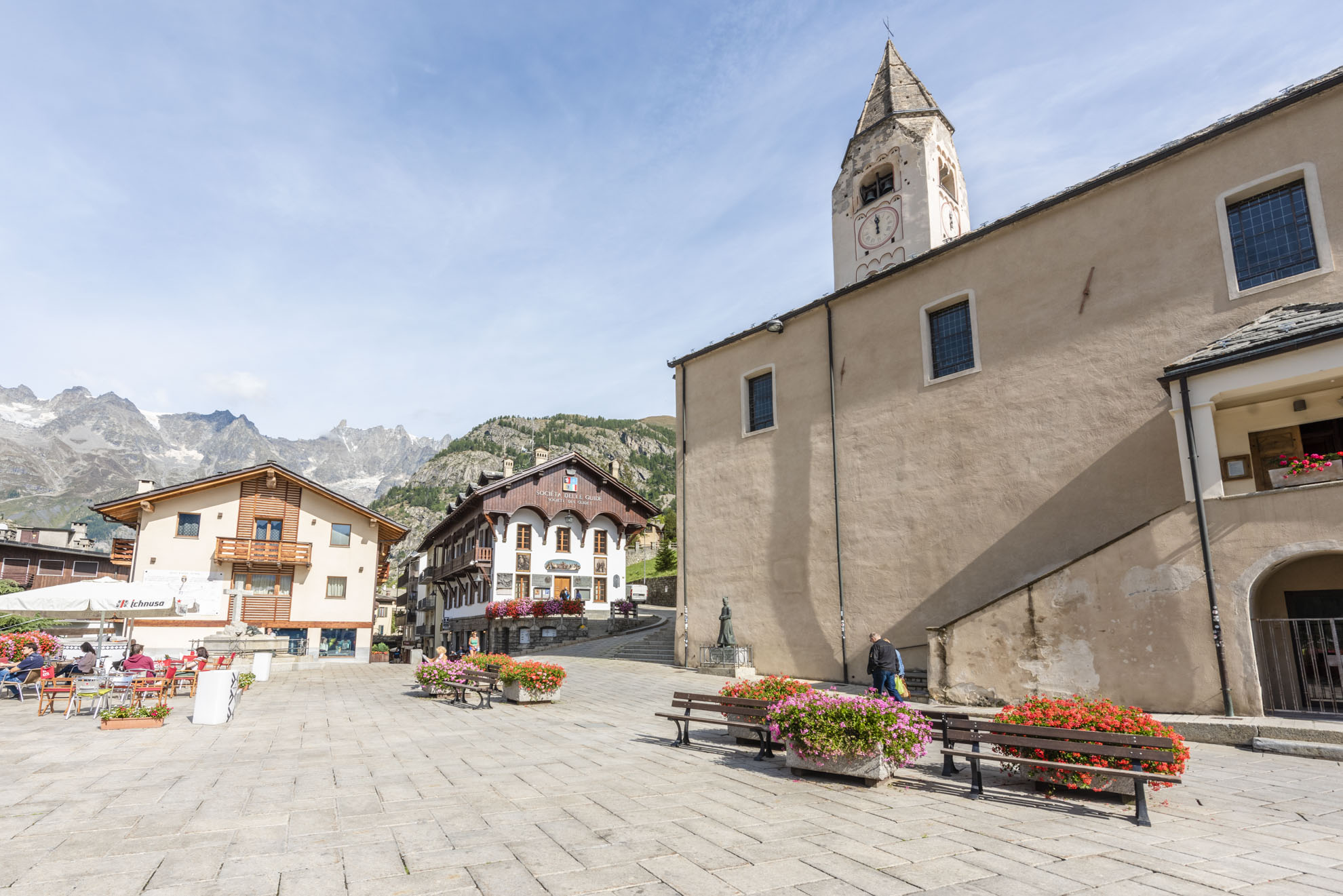
The square is dominated by the Church of San Pantaleone, dating back to the eighteenth century, featuring a rare bell tower in the Aosta Valley and a main altar in black marble. Inside, the church houses a painting of the martyrdom of Saint Sebastian and an ex-voto commemorating the French invasion.
Exiting the square, on the right, stand the monuments dedicated to the mountaineers Mario Puchoz, Giuseppe Petigax, and Émile Rey. Opposite, the Duca degli Abruzzi Alpine Museum tells the story of mountaineering and of the Courmayeur Mountain Guides, the first in Italy, founded in 1850.
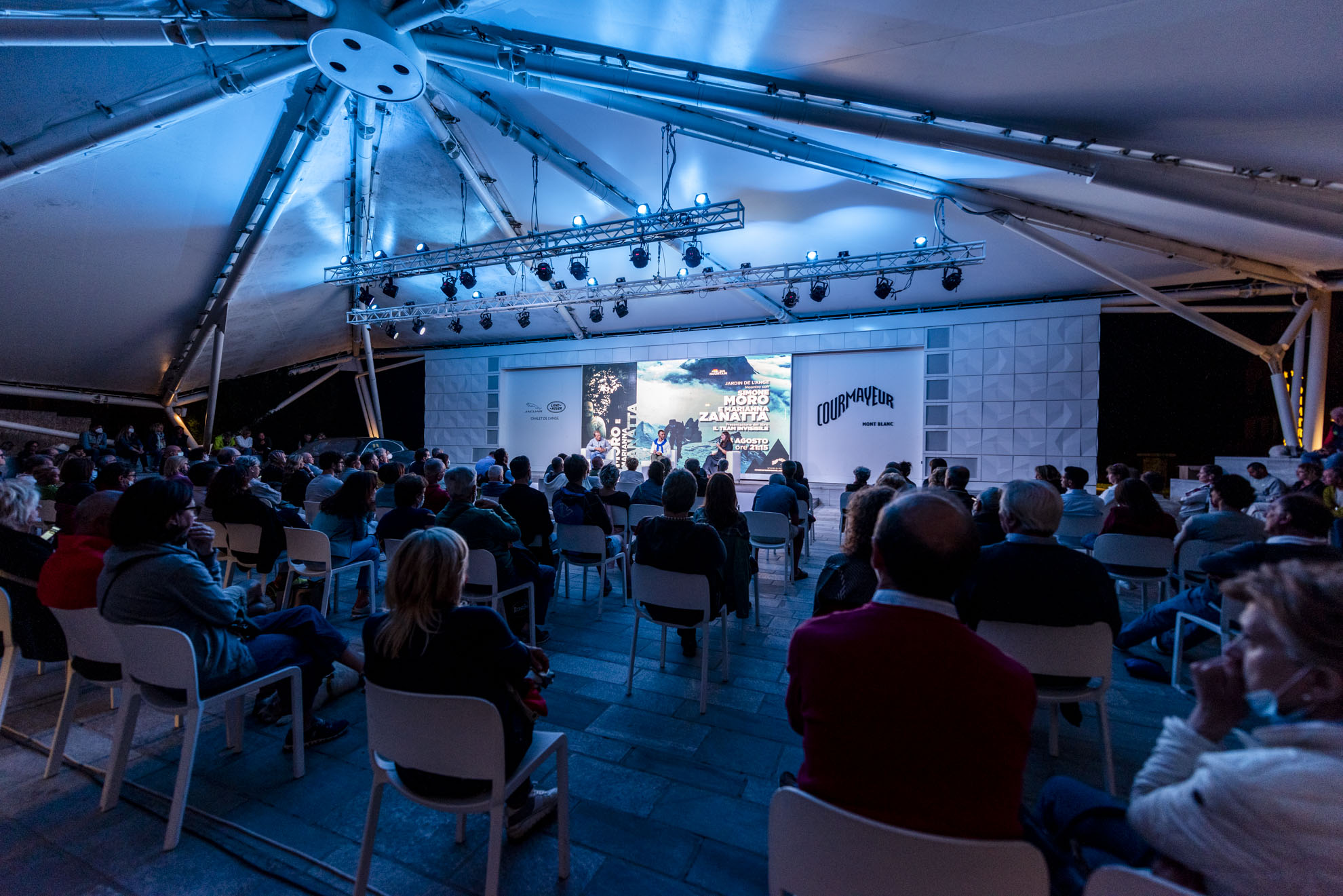
After crossing Piazzetta Brenta and keeping to the right, you reach the Jardin de l’Ange, with its distinctive Chalet, the main venue for Courmayeur’s events.
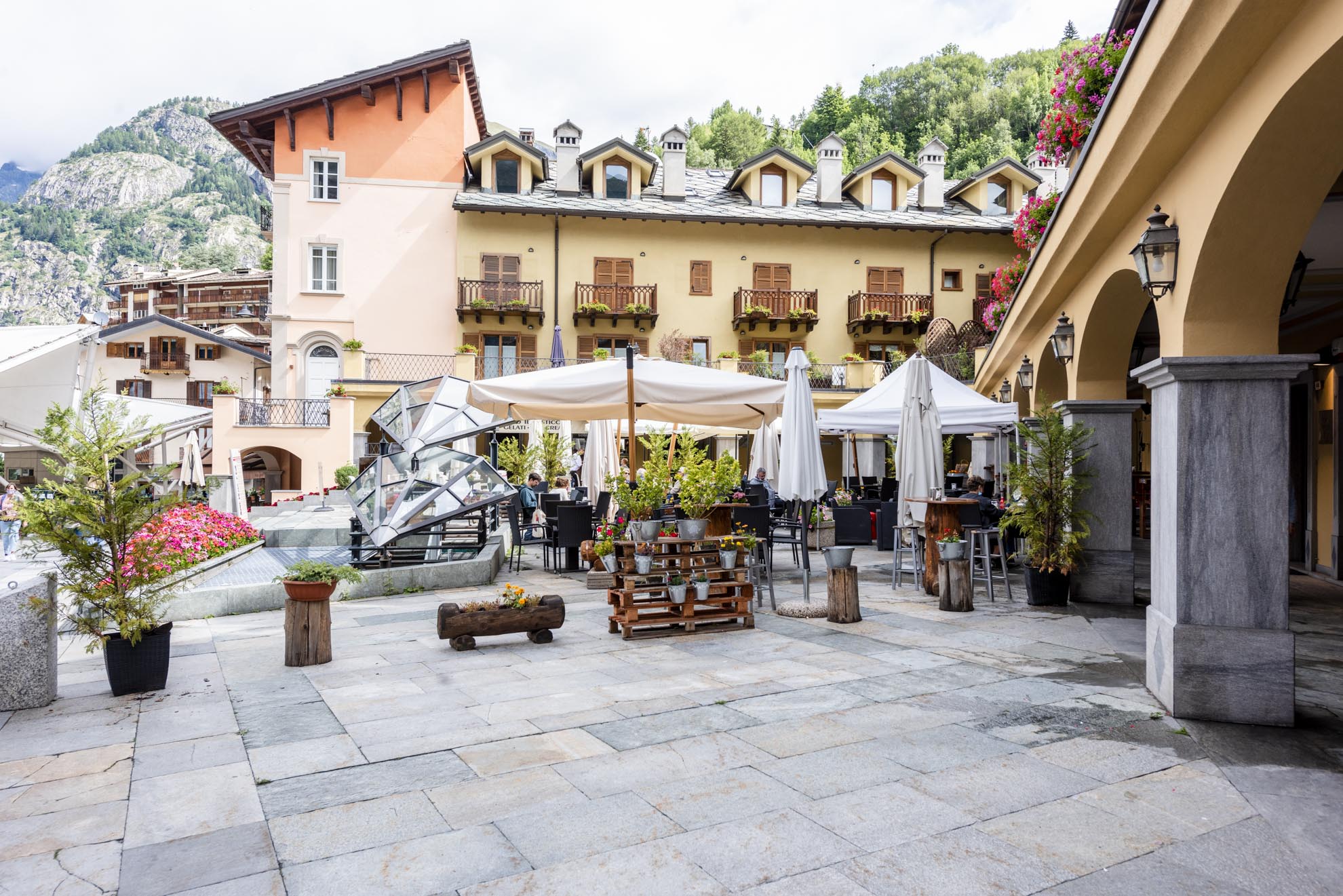
History tells us that in 1711 the fortified house of the noble Piquart de la Tour family, later owned by the Carron family, was—by order of the Savoy dynasty—transformed into an accommodation facility. Over the centuries, all its owners worked to make it a landmark of elite tourism.
The Hotel Ange, among the first to feature electricity and hot water in all its 100 rooms, was acquired in 1905 by the Peraldo family, who renamed it Hôtel Ange & Grand Hôtel. With its ballroom, elegantly frescoed halls, and the Chalet de l’Ange, it became a symbol of elegance and hospitality.
In the 1990s, with no heirs, the Peraldo family—wishing to preserve the tradition of hospitality—sold the hotel to a company that later converted it into apartments and shops.
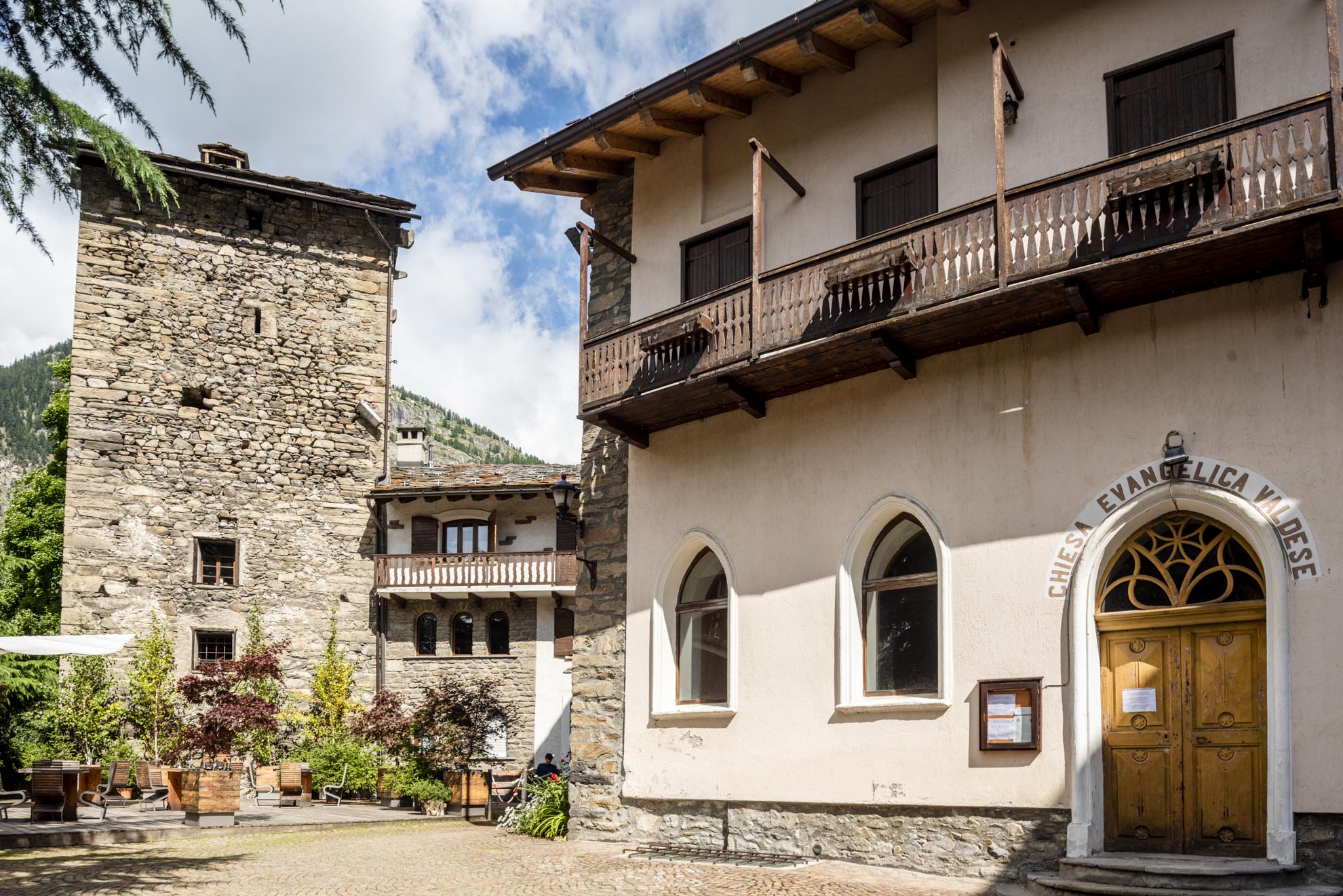
Here stands the Waldensian Church, present in Courmayeur since 1848, and the oldest Waldensian temple in the Aosta Valley. While the region once hosted several Waldensian communities, today services are held only in the churches of Aosta and Courmayeur, exclusively during the summer months, on Sundays.
Next to the church rises the Tour Malluquin, a medieval tower belonging to the Malluquin family, first mentioned in 1351. It was later owned by the D’Avise family from the 15th to the 18th century. Today it is divided among several owners and hosts small exhibitions. The tower, with its square plan, is made up of seven floors separated by wooden ceilings, and its original entrance was located eight metres above ground level.
Piazzetta Petigax borders the garden of the Hotel Royal e Golf, built in 1854. Once a destination for the aristocracy, it hosted Queen Margherita of Savoy and Giosuè Carducci. After being renovated in 1953, the hotel features a six-storey central building and a façade inspired by the Dent du Géant.
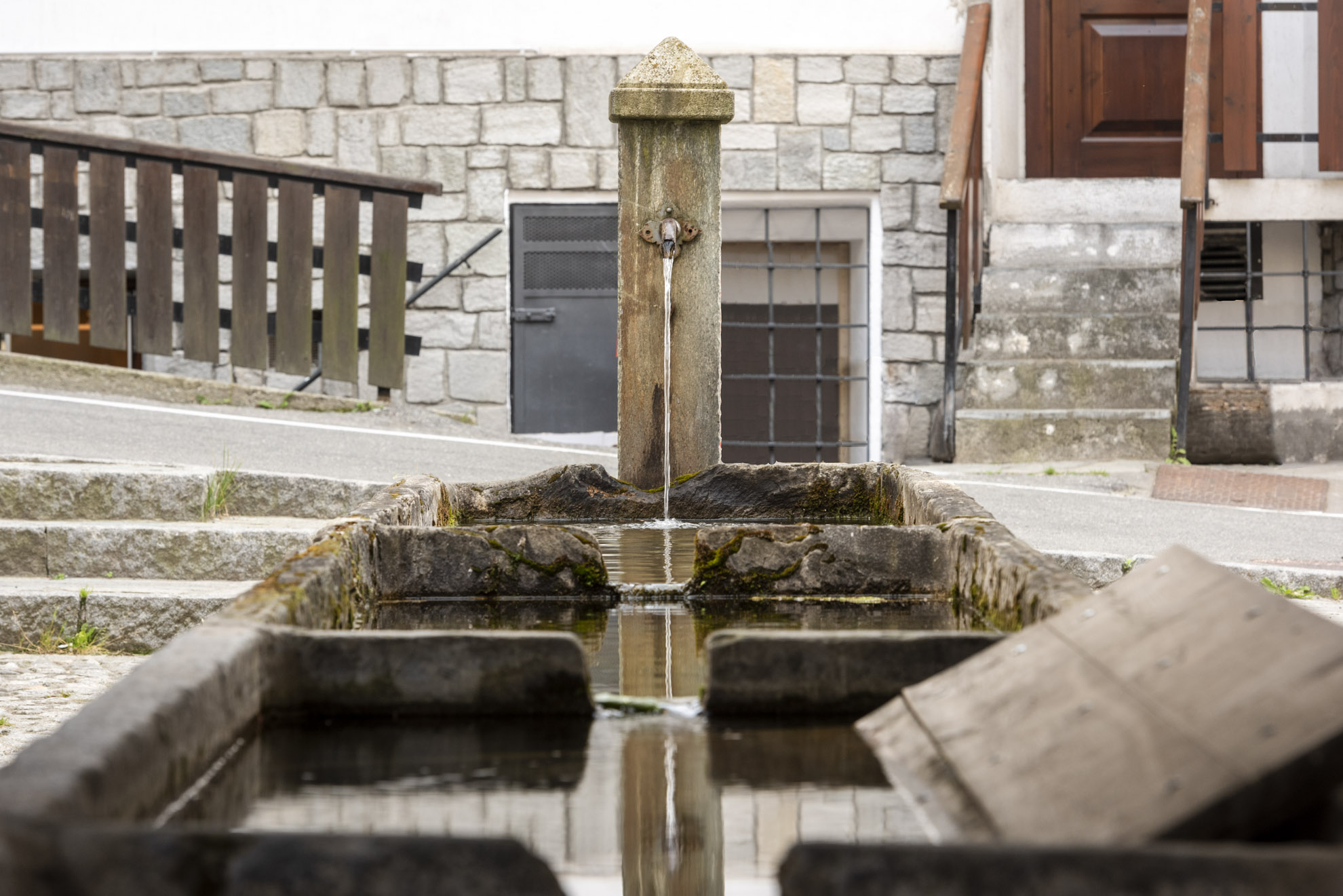
Built in 1916, the villa reflects the Central European half-timbered style, with wooden framing in the upper part dividing the façade into smaller sections. On the northern side of the façade, several decorative elements can still be seen, along with the year of construction. Today, the villa has been renovated and converted into private apartments.
About a hundred metres further on, on the left, next to the Pussey tennis courts, another historic villa can be found:
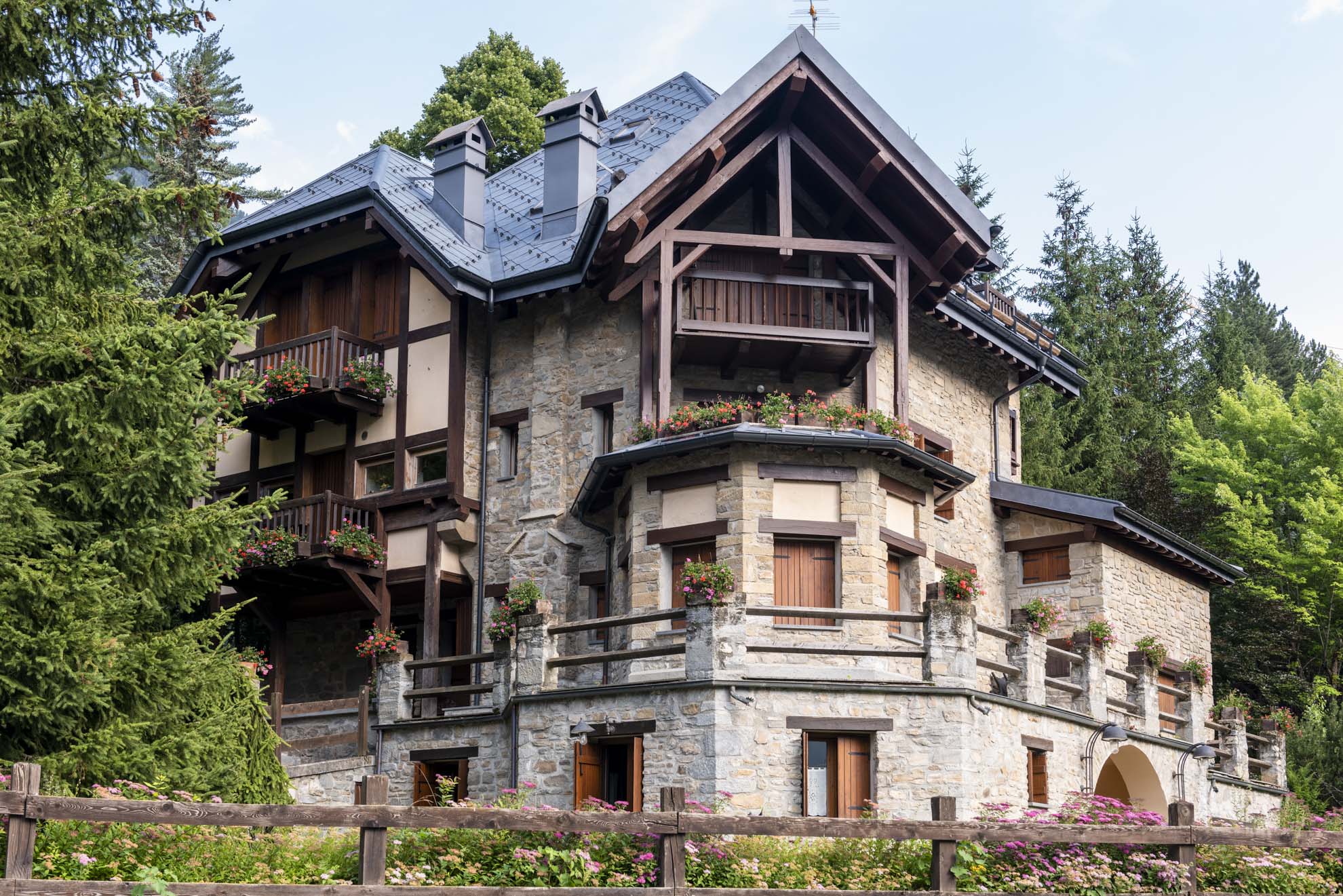
As this is a private residence, entry is not permitted, but it can be admired from the road. The complex is composed of a group of buildings in a medieval-inspired style, constructed between 1900 and 1945, surrounded by a garden and enclosed by a stone wall defining the property.
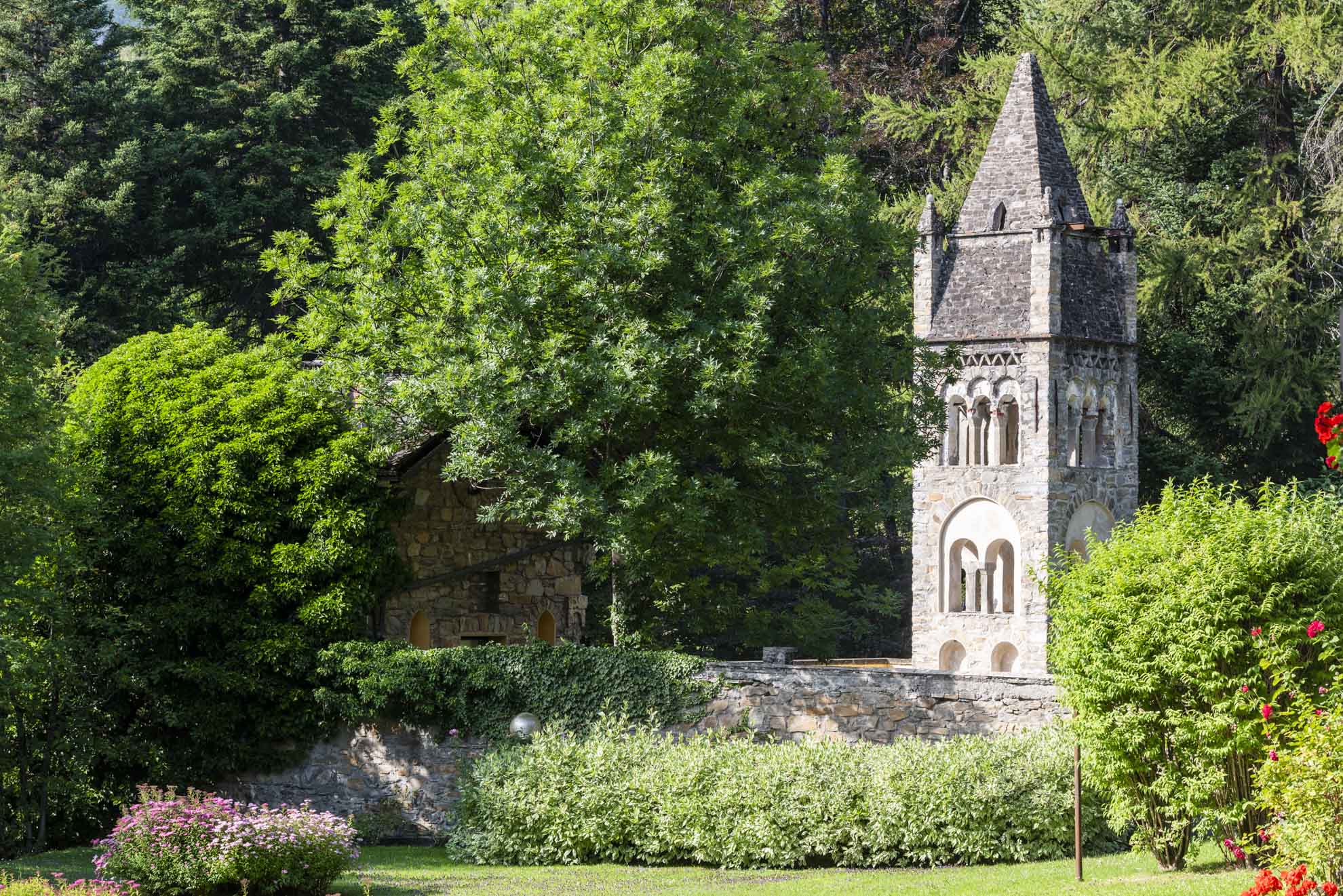
At its heart lies the main villa, built in 1930, alongside a dépendance also clad in stone, featuring paired arched openings reminiscent of medieval mullioned windows. To the north of the villa stand a private chapel, a bell tower, and a portico, all built in stone and enriched with medieval architectural elements such as triple-light windows and arched galleries. The estate is set within a garden featuring a stream and a small lake.
On 17 July 1965, Villa Tondani hosted the distinguished meeting between French President Charles de Gaulle and Italian President Giuseppe Saragat, on the occasion of the inauguration of the Mont Blanc Tunnel.
Today, Villa Tondani has been renovated and divided into private apartments.
Retracing your steps for a few metres, take Via Marconi; about twenty metres further on, on the right, the journey continues…
The path follows the course of a small stream that once carried water from Entrèves, near the sports field area, all the way to Palleusieux, in the municipality of Pré-Saint-Didier.
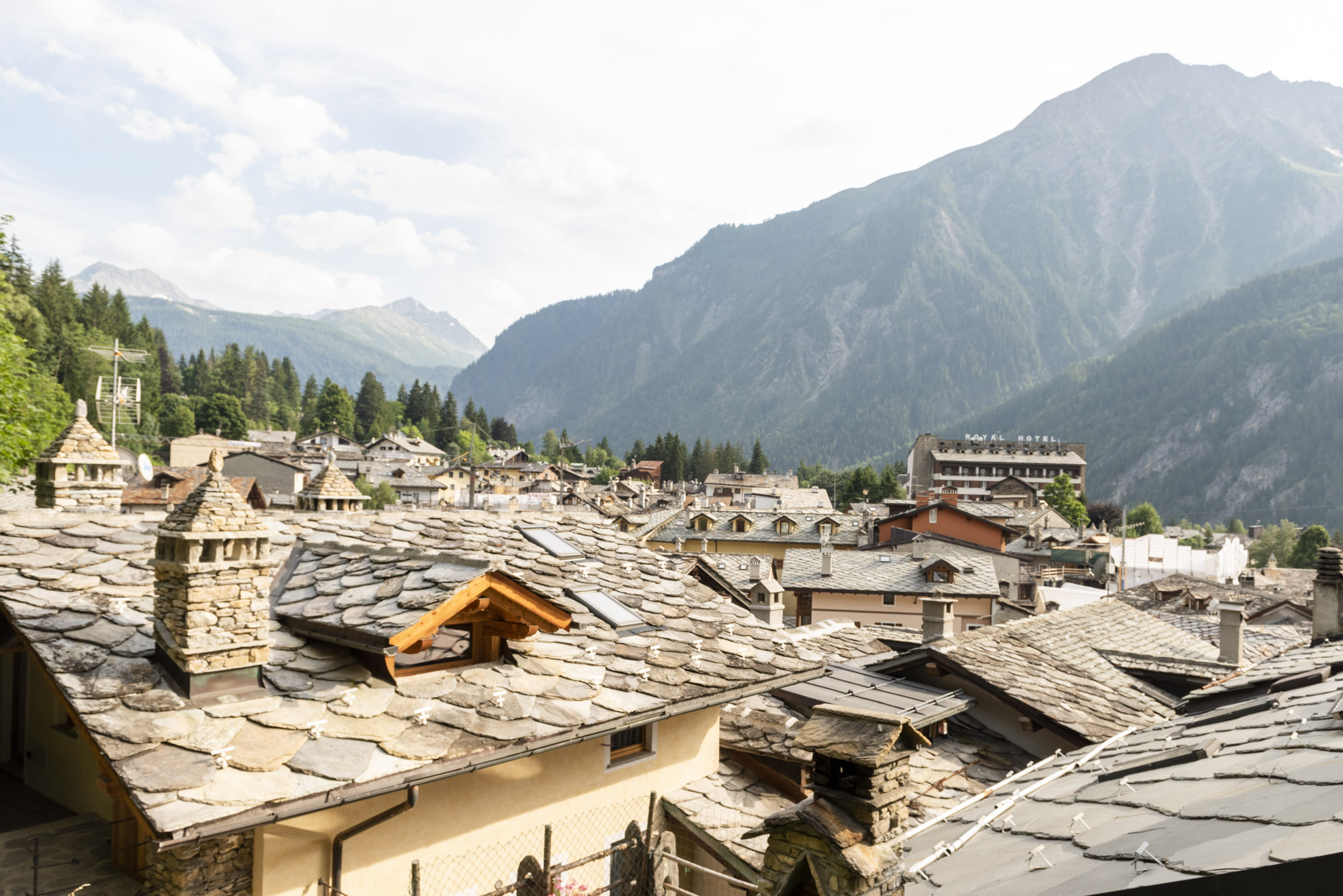
Walking along it, you reach a point above the Church, where Courmayeur can be admired from an unexpected viewpoint, with its slate roofs, narrow streets, and stone houses of Tséralèi, the oldest district of Courmayeur.
At the end of the trail, you arrive at Strada del Villair and, after about 200 metres, at the junction, continuing left onto Strada Grand Ru, you enter Parco Bollino. Walking down through the park, you return to Viale Monte Bianco, close to the Courmayeur Town Hall, the starting point of the walk.
 Spring
  Summer
  Autumn
  Winter